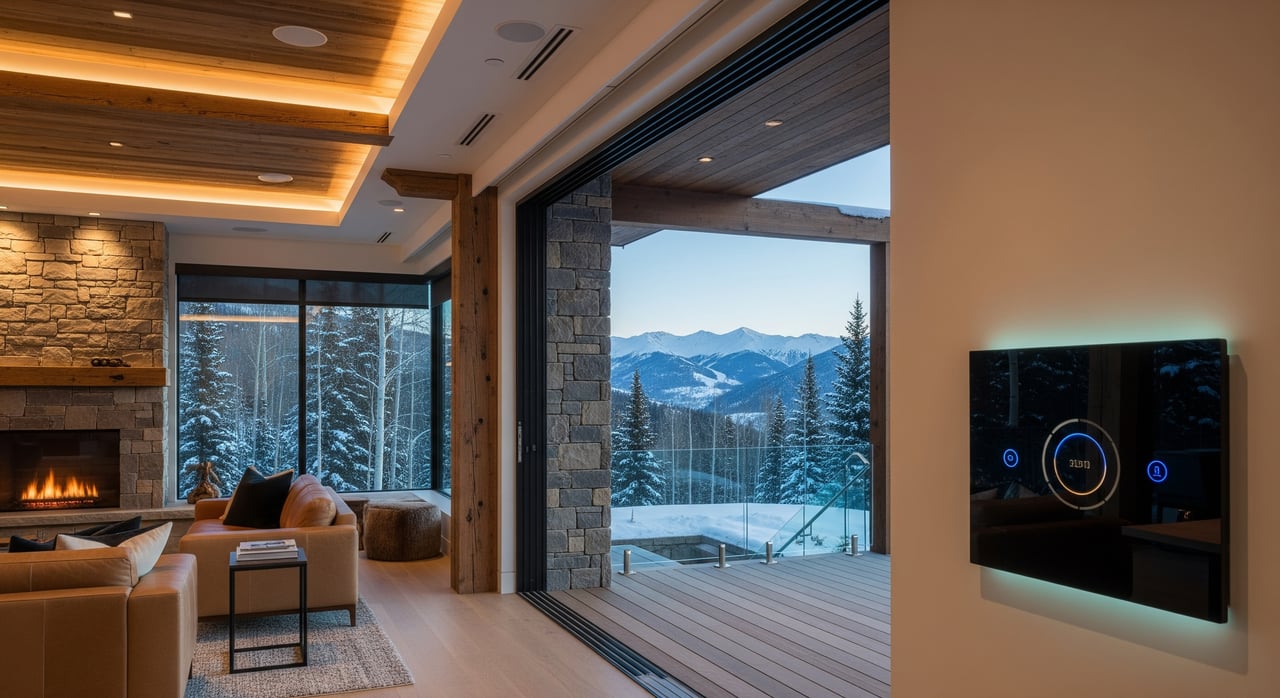
If you live or plan to buy in Eagle, you already know mountain life asks more from a home’s systems. Cold, dry winters, freeze and thaw cycles, and big snow events can test comfort and safety. You want systems that work, cost what you expect, and hold value when it is time to sell. In this guide, you will learn which systems matter most in Eagle, how to evaluate them, and what to do before listing or making an offer. Let’s dive in.
Why these systems matter in Eagle
Eagle’s high altitude and dry, cold winters create special demands. Very low humidity can stress people and wood finishes. Heavy snow and ice can challenge access and safety. Heating systems run long hours, and large day and night temperature swings make control strategy important. For buyers and sellers, comfort features like radiant heat, whole‑house humidification, and snow‑melt can boost appeal, but condition and documentation often drive value and negotiation.
Whole‑house humidification
How it works
Whole‑house humidifiers add moisture to indoor air through your HVAC system. Common types include bypass evaporative units, fan‑powered or steam humidifiers mounted to ductwork, and in‑duct steam units. Portable humidifiers can help in single rooms, but whole‑house systems distribute humidity more evenly.
Comfort targets in winter
In a cold climate, aim for a modest indoor range, roughly 25 to 35 percent RH in deep freezes. Higher humidity can raise condensation risk on cold surfaces and can lead to mold. The right set point balances comfort and window performance.
What to check at a showing
- Identify the humidifier type and confirm a humidistat is present and away from drafts or heat sources.
- Look for leaks, mineral buildup, or corroded drains on or near the unit.
- Ask for service records and the date of the last pad, cartridge, or steam element replacement.
- Test function if possible. Compare the humidistat reading with a portable hygrometer.
Red flags and upkeep
- Rust or corrosion at drains or nearby ductwork.
- No humidistat, or a disconnected or undersized unit.
- Signs of past condensation or mold on window frames or inside walls.
- Hard water without a maintenance plan for pads and elements.
Cost and install notes
These systems are usually a minor mechanical add and are best installed by a licensed HVAC technician. Expect recurring costs for pads, filters, or steam elements. Confirm any needed plumbing connections meet code and check with the local building department before installation.
Snow‑melt systems
System types
- Hydronic systems: heated fluid circulates through tubing embedded in concrete or asphalt. A boiler or boiler plus heat exchanger provides heat.
- Electric systems: heating cables or mats embedded under the surface.
- Roof and gutter de‑icing: electric heat trace cables at roof edges and in gutters.
Performance and operating costs
Snow‑melt improves safety and convenience, especially for driveways and walkways. It can be energy intensive during storms. Controls that use pavement temperature plus moisture or precipitation sensors help avoid unnecessary run time and reduce cost.
What to inspect
- Identify whether the system is hydronic or electric. Find control panels, sensors, manifolds, and pumps.
- Hydronic: check glycol level and condition if used, look for leaks, rusted relief valves, and pump health. Confirm manifold isolation valves are present.
- Electric: open accessible junction boxes to look for corrosion and confirm ground‑fault protection. Verify sensor function.
- Test the controller and sensors if safe to do so, or ask whether the system was recently powered and tested.
- Walk the surface for cracks or settling that could expose or damage embedded elements.
Red flags and permits
- Missing or nonfunctional sensors or controllers.
- Active leaks in hydronic loops, corroded electrical components, or slabs lacking insulation under the circuit.
- No accessible shutoffs or service documentation.
- Snow‑melt retrofits typically require mechanical or electrical permits and inspections. Fuel source changes can involve additional permits and high‑altitude combustion considerations.
Durability and repair
Electric cables are difficult to repair once embedded. Hydronic loops can sometimes be isolated at manifolds if designed with valves. Insulation under the slab is critical for efficiency and is a common oversight.
Boilers and radiant heating
Why radiant heat shines
Boilers deliver hot water to baseboards, radiators, or in‑floor radiant tubing. Radiant slab systems are prized for even warmth, fewer drafts, and comfort at lower air temperatures. Modern condensing and modulating boilers paired with good radiant design can be very efficient in mountain climates, and they pair well with hydronic snow‑melt when present.
High‑altitude combustion
Elevation affects combustion. Manufacturers publish altitude limits and adjustment requirements. Some appliances need derating or factory settings for safe operation and proper venting. Sealed‑combustion or fan‑assisted units are often more reliable at altitude. Venting and chimney draft can change with weather, so clearances and draft should be verified.
What buyers should verify
- Document boiler age, model, fuel type, and service records.
- Confirm annual service was completed, including combustion analysis and flue inspection.
- Check loop pressure, expansion tank function, and relief valve condition. Look for corrosion at joints and manifolds.
- Locate and label radiant floor manifolds. Ask for layout drawings if available.
- Verify an outdoor reset control is present and functional for smoother heat and better efficiency.
- Confirm carbon monoxide detectors are installed on the same level as combustion appliances.
Red flags and documentation
- No service records or repeated repair history.
- Visible leaks, corrosion, or incompatible piping materials that could cause galvanic corrosion.
- Boilers beyond typical service life with no overhaul.
- Combustion or chimney work that appears nonstandard or unpermitted.
Efficiency and value
Radiant heat is viewed as a premium amenity in Eagle. Systems that are documented, well maintained, and efficiently controlled are more valuable than systems that are simply present without records.
Smart controls and integration
What matters in Eagle
Smart thermostats, boiler controls, and snow‑melt controllers can boost comfort and lower energy use when set up correctly. Outdoor reset controls match water temperature to outdoor conditions, which improves efficiency and comfort. Snow‑melt controllers that sense pavement temperature and moisture prevent unnecessary operation.
Testing and reliability
- Identify every controller and thermostat, and confirm they are compatible with the installed system.
- Verify outdoor sensors are present, unobstructed, and calibrated. Confirm controls are in automatic mode and respond to inputs.
- Ask for integration documentation that explains how thermostats communicate with boiler and snow‑melt controllers.
- Check that critical controllers have reliable power and backups.
- In rural mountain settings, internet can be intermittent. Local control logic is more important than cloud features for reliable operation.
Upgrade tips
Work with a hydronic and controls specialist. Consumer smart thermostats do not always support modulating boilers or outdoor reset without a proper interface. Target upgrades like outdoor reset and zone controls that can deliver real comfort and efficiency gains when commissioned correctly.
Pre‑list prep for sellers
A little prep can reduce buyer friction and improve your net.
- Gather documents: service records, manuals, warranties, and permits for boilers, humidifiers, snow‑melt, and controls.
- Schedule professional service: annual boiler tune‑up and combustion test, flue and draft check, radiant pressure test and zone balancing, snow‑melt sensor test and glycol check if applicable, humidifier pad or element replacement and drain flush.
- Fix visible issues: active leaks, corroded electrical junctions, mislabeled or unlabeled zones and manifolds, and any controls that overshoot or undershoot.
- Verify life safety: carbon monoxide and smoke detectors installed and working to local standards.
- Create a simple system folder: operating basics, preferred service vendors, typical annual costs, and a recommended maintenance schedule.
Negotiation, permits, and value
Expect buyers to ask for service records, inspections, or credits for near‑term maintenance such as boiler overhaul or glycol replacement. Deferred maintenance can become a bargaining point. Verify permits for boiler replacements, snow‑melt installations, and HVAC upgrades with local building departments, and disclose any missing permits or past code issues. The market rewards well documented, efficient installations more than the label of a premium feature alone.
Quick showing checklist
Use this as a fast walkthrough guide before a showing.
Humidification
- Humidifier visibly installed. Humidistat on and set between 25 and 40 percent. Confirm with a portable hygrometer.
- No visible leaks, mineral deposits, or mold near the unit.
Boilers and radiant
- Boiler area clean, unobstructed, and dry. No active leaks.
- Thermostats respond and zones change temperature when adjusted.
- Manifolds labeled and accessible.
- Carbon monoxide detector installed near combustion appliances and working.
Snow‑melt
- Controller panel accessible and intact. Visible sensors not buried or disconnected.
- Driveway and walkway areas clear, and controls set appropriately so you avoid accidental activation during a showing.
Smart controls
- Note models of thermostats and controllers. Confirm remote access if available and that local manual override works.
Documentation
- Service records, manuals, warranties, and permit paperwork organized in a binder for buyers to review.
The bottom line
In Eagle, the right systems make mountain living easier and protect value. Focus on condition, controls, and documentation rather than labels alone. Whether you are comparing homes or preparing to list, a clear plan for inspection, service, and records will pay off at closing.
Ready to evaluate a property or tune up your listing plan in Eagle? Reach out to Benjamin Finn for local guidance and a practical, results‑driven approach.
FAQs
What indoor humidity target works for Eagle winters?
- Aim for about 25 to 35 percent RH in deep‑freeze conditions to balance comfort and reduce condensation risk on cold surfaces.
How can I tell if a snow‑melt system is hydronic or electric?
- Look for a manifold with pumps and tubing for hydronic, or heating cable junction boxes and dedicated electric controls for electric systems.
What should I ask about a boiler’s suitability at altitude?
- Ask for manufacturer altitude guidance, service records showing combustion analysis, and confirmation that venting and draft were inspected.
Are common smart thermostats compatible with radiant heat and modulating boilers?
- Some are not without the right interface. Verify compatibility or use hydronic‑specific controls with outdoor reset for best results.
Do I need permits to add or replace a snow‑melt system in Eagle?
- Yes in most cases. Expect mechanical or electrical permits, and additional permits if you add or change a boiler or fuel source.
How do these systems affect value and negotiations?
- Radiant heat, snow‑melt, and humidification can lift appeal, but buyers focus on condition, efficiency, and documentation, which influence appraisals and credits.