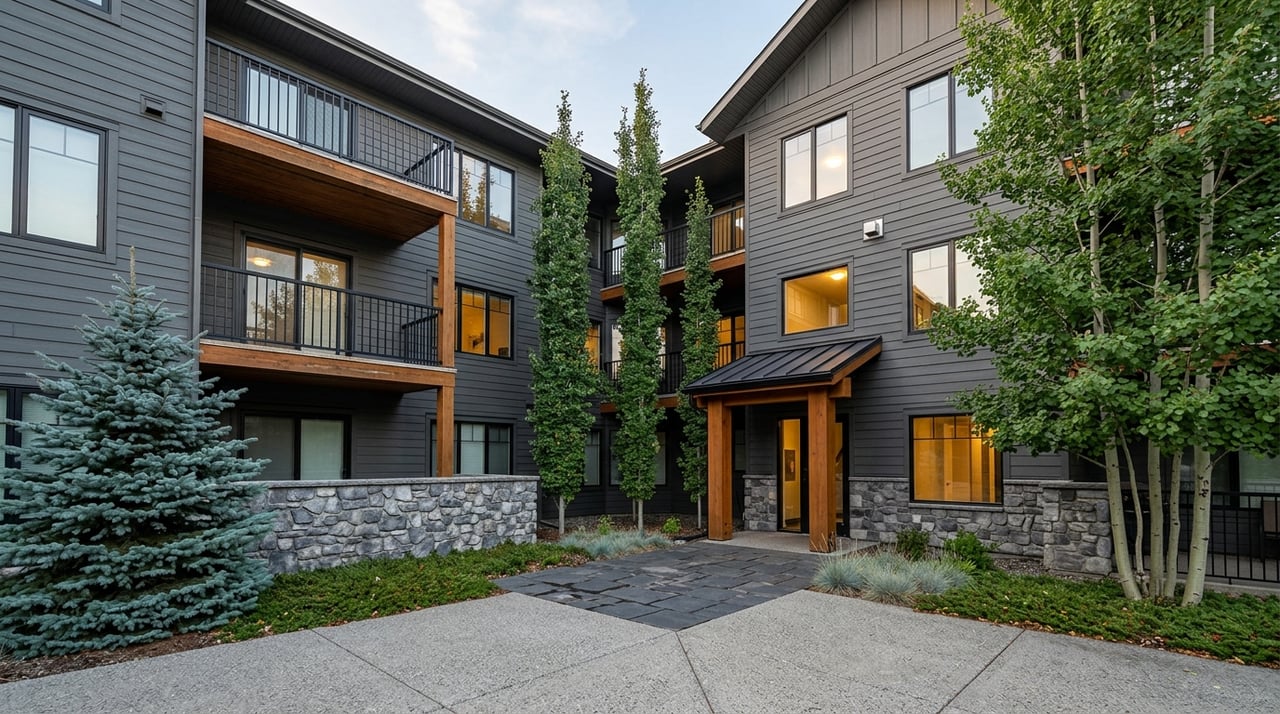
Buying a condo in Avon with short-term rental potential can look simple at first glance, but the real answer is usually hidden in the details. You may find a unit you love, only to learn the building is already at its rental-license cap or the HOA limits stays in ways that change the math. If you are considering a condo purchase in Avon, understanding the town’s current rules before you write an offer can help you avoid expensive surprises and make a smarter decision. Let’s dive in.
How Avon regulates short-term rentals
In Avon, short-term rentals generally mean stays of less than about a month. Before advertising a property, an owner must obtain both a business license and a sales tax license, and the business license number must appear in the listing, according to the Town of Avon short-term rental FAQ.
Avon updated its short-term rental program in 2022 to add licensing caps, new license types, updated safety standards, and a broader Town Core area where short-term rentals are encouraged, as outlined in the town’s short-term rental background page. That means condo buyers need to think about more than location and price. You also need to know which license type may apply and whether the building still has capacity.
If an owner operates without a license, the town says it issues a one-time cease-and-desist warning before moving to summons and penalties. That is helpful context, but it should not be treated as a safety net for buyers. The better move is to verify the rules up front.
Why condo buyers need to check the building
For condo and townhome purchases in Avon, the key question is often the complex, not just the address. Outside the Town Core, Full short-term rental licenses are capped at 15% of the dwelling units in a property or complex, and Avon publishes a monthly property-by-property availability report showing where capacity may still exist.
That building-level cap can directly affect how you value a condo. Two similar units in the same part of Avon may have very different rental potential if one complex still has Full-license availability and the other does not. For buyers who care about flexibility, that difference matters.
The town also notes that Limited and Resident Occupied licenses are not subject to that same cap outside the Town Core, based on the current Avon STR rules. So even if a complex is full on Full licenses, there may still be other legal ways to rent depending on your intended use.
Avon short-term rental license types
Avon currently offers three main short-term rental license types. Each one has different practical implications for condo buyers.
Full license
A Full license allows unlimited rental nights while the license is active. For many buyers, this is the most flexible option, especially if you plan to use the condo as a second home and rent it when you are away.
Outside the Town Core, this is also the license type affected by the 15% cap at the property or complex level. That is why checking the building’s current status is such an important part of condo due diligence.
Limited license
A Limited license allows up to 42 rental nights. This can work if you mainly want personal use with occasional rental income rather than year-round booking activity.
For some buyers, this option preserves flexibility even when Full-license availability is tight. It may not fit a pure investment model, but it can still support a part-time rental strategy.
Resident Occupied license
A Resident Occupied license allows unlimited nights, but a full-time resident must be present for part of each guest stay. This structure is more specific, and it tends to fit owners who live in the property full time and host guests under the town’s occupancy rules.
According to Avon’s published fee schedule, Resident Occupied licenses are priced lower than Full licenses. Still, the occupancy requirement makes this a very different use case from a typical second-home investment condo.
Avon fees, taxes, and compliance costs
Short-term rental rules affect more than whether you can rent. They also shape your operating costs.
According to Avon’s current STR materials, the total tax burden on short-term lodging is 10%: 4% sales tax, 4% accommodations tax, and a 2% short-term rental tax for community housing on residentially zoned properties. The town explains on its short-term rental page that if you use a marketplace facilitator like Airbnb or VRBO, the platform is expected to collect and remit the tax. If not, you are responsible for doing so, and returns are due by the 20th of each month.
License fees also vary. Avon’s published fee sheet shows Full licenses at $350 to $500 depending on bedroom count, while Resident Occupied licenses are $150, according to the town’s fee schedule.
Beyond fees and taxes, Avon requires basic safety compliance. Owners are responsible for CO alarms, smoke alarms, egress windows, and handrails, and the licensing process includes an affidavit and acknowledgment of management requirements in MuniRevs, based on the town’s FAQ and licensing guidance.
HOA rules can override your plans
Even if Avon allows short-term rentals under town rules, that does not mean your condo association does. Avon explicitly tells buyers to verify whether short-term rentals are allowed in the HOA, and notes that use restrictions may include rental bans or minimum lease-length rules in the governing documents, as explained on the town’s STR FAQ page.
For condo buyers, this is one of the most important parts of due diligence. A unit may be in a building with town licensing capacity, but the HOA could still prohibit short-term rentals or impose rules that materially change your options.
At a minimum, you should review:
- The recorded declaration and CC&Rs
- The bylaws
- Any rental-cap language
- Any minimum lease-term language
- Any on-site management or front-desk rules
These documents help you confirm whether your intended use actually matches the property’s governing framework. In Avon, that can be the difference between buying a flexible mountain condo and buying a unit that only works for personal use or longer-term occupancy.
Some units are not eligible at all
Not every condo can be used as a short-term rental in Avon. The town states that short-term rental use is not allowed in units that are deed-restricted for affordable housing, long-term residential use, primary residential use, or full-time residential use, based on the recorded town document.
That makes deed restriction review essential. If you are buying with any rental strategy in mind, this should be confirmed early in the process rather than after contract.
Town Core versus other Avon areas
Avon’s rules make an important distinction between the Town Core and areas outside it. The town’s STR framework and overlay map are the main tools for understanding where different rules apply, and the town specifically notes that short-term rentals are encouraged in the Town Core under its updated program, according to the STR background page.
For buyers, this means location inside Avon matters in a very practical way. A condo in the Town Core may sit in a different licensing environment than a similar condo outside it. That should be part of your search criteria from day one if rental use is a priority.
Avon versus Vail for condo investors
If you are comparing Avon to nearby Vail, the two markets have different short-term rental risk profiles. Avon tends to be more about whether a specific condo or townhome complex still has license capacity or qualifies for an uncapped license type.
Vail also requires an approved short-term rental license before advertising, but its system is more operationally detailed. The town uses three license categories and requires, for many properties, a local representative available 24/7 within 60 minutes, according to the Town of Vail short-term rental page.
Vail’s ordinance also includes annual expiration, non-transferability, insurance requirements, inspection requirements for many properties, and stricter complaint response rules, as described in the town’s short-term rental ordinance materials and complaint process page. On taxes, Vail’s current published short-term lodging tax rate is 10.8%, according to the town’s sales tax page.
That does not make one town automatically better than the other. It means Avon buyers should pay especially close attention to building-level license availability, while Vail buyers often need to focus more on ongoing operational compliance.
A smart Avon condo due diligence checklist
If you are shopping for a condo in Avon and short-term rental use matters, keep this checklist handy:
- Confirm whether the property is in the Town Core or outside it
- Check whether the complex has Full-license availability on Avon’s monthly property report
- Verify which STR license types may apply to your intended use
- Review HOA documents for rental bans, caps, and minimum lease terms
- Confirm whether any deed restriction blocks short-term rental use
- Estimate licensing fees, taxes, and basic safety compliance costs
- Understand whether front-desk or on-site management rules affect operations
A little diligence before you buy can save you from buying the wrong asset for your goals. In a resort market, details drive outcomes.
If you want help evaluating an Avon condo through both a lifestyle and investment lens, Benjamin Finn can help you compare buildings, review the practical questions that matter, and move forward with more clarity.
FAQs
What short-term rental licenses are available for Avon condo buyers?
- Avon currently offers Full, Limited, and Resident Occupied short-term rental licenses, each with different rules on rental nights and occupancy.
What is the short-term rental cap for Avon condo complexes?
- Outside the Town Core, Full short-term rental licenses are capped at 15% of the dwelling units in a property or complex, while Limited and Resident Occupied licenses are not capped under the current town framework.
What taxes apply to Avon short-term rentals?
- Avon’s published total tax burden is 10%, made up of 4% sales tax, 4% accommodations tax, and a 2% short-term rental tax for community housing on residentially zoned properties.
Can an Avon HOA prohibit short-term rentals in a condo building?
- Yes. Avon specifically tells buyers to verify HOA rules, and condo documents may include short-term rental bans, rental caps, or minimum lease-length requirements.
Are all Avon condos eligible for short-term rental use?
- No. Avon does not allow short-term rentals in units that are deed-restricted for affordable housing, long-term residential use, primary residential use, or full-time residential use.
How is Avon different from Vail for short-term rental buyers?
- Avon’s rules often turn on building-level license capacity and license type, while Vail’s current system places more emphasis on annual renewal, local representation, insurance, inspections, and strict complaint-response rules.