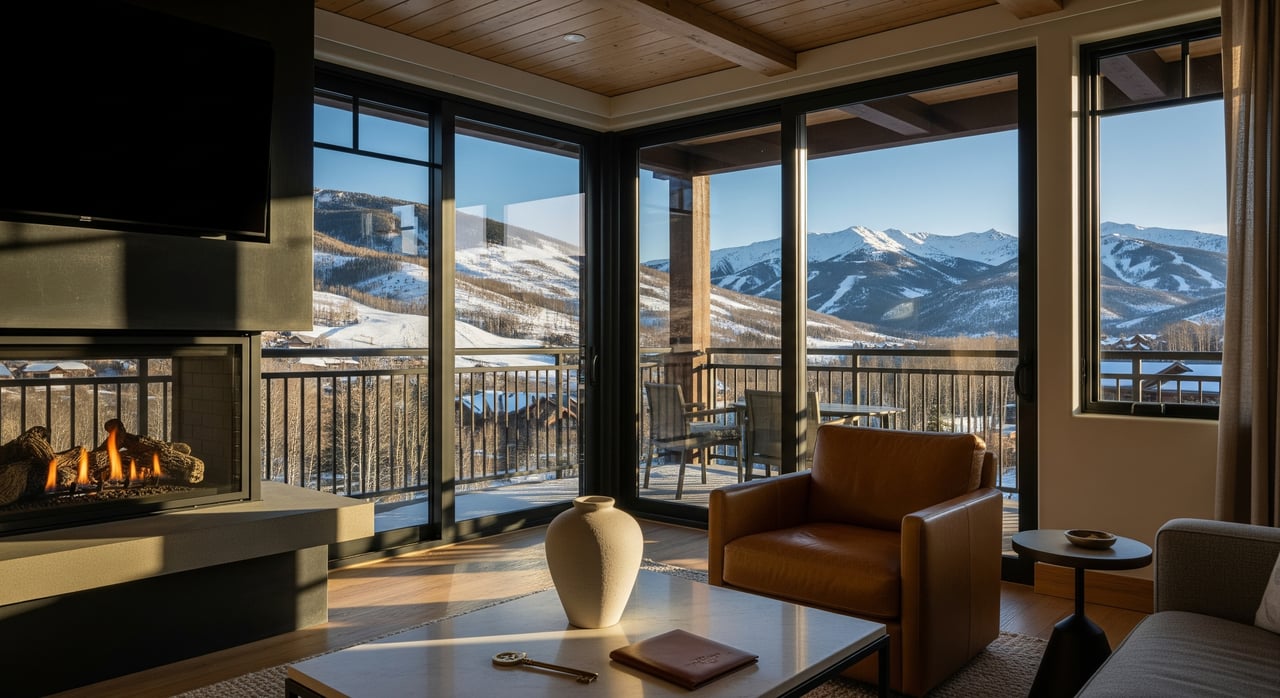
Eyeing a Vail Village or Lionshead condo-hotel but unsure how to finance it? You are not alone. These properties live at the intersection of resort lifestyle and hotel operations, and lenders treat them very differently from standard condos. In this guide, you will learn which loan options typically work, what lenders review, and how to prepare so you can move fast on the right unit. Let’s dive in.
What a condo-hotel is and why it matters
A condo-hotel is a condominium inside a building that operates like a hotel. Units can be placed into nightly rental programs, often through a professional operator, with front desk service, centralized booking, and shared amenities. These features create real income potential but also introduce hotel-style risks that lenders analyze closely.
Lenders often label these projects as non-warrantable when they fail agency standards. Common triggers include a high level of commercial activity, a large share of investor ownership, centralized hotel management, or a single entity owning many units. When a project is non-warrantable, traditional agency loans are usually off the table, and portfolio or commercial financing becomes the path forward.
How lenders underwrite Vail condo-hotels
Warrantability and project review
Your lender will review condo project documents against agency criteria such as commercial space percentages, owner occupancy, single-entity ownership, budget health, reserves, and any litigation. If the project fails these tests, expect a non-agency solution like a portfolio loan or an investment-style product.
Rental program structure and income
If nightly rentals are permitted, lenders ask for the rental management agreement and documentation showing how income is earned and distributed. Some lenders consider rental income in underwriting, but they often apply conservative vacancy and expense assumptions. Others use a DSCR approach that focuses on net operating income to test whether the property can support the debt.
Appraisal methods and comparables
Appraisals often include an income approach in addition to sales comps. The appraiser may request occupancy and revenue history, seasonal performance, and short-term rental comparables. Values can be more volatile than standard condos, which is one reason lenders add pricing and documentation requirements.
HOA and association health
Lenders review association budgets, reserve strength, meeting minutes, assessments, and any litigation disclosures. Robust reserves and clear governance ease concerns. Smaller associations or projects with heavy commercial exposure tend to face stricter terms.
Borrower profile and liquidity
Because condo-hotels are considered higher risk, lenders favor well-qualified borrowers with strong credit, liquidity, and clear documentation. If you have a private banking relationship, that can improve access to portfolio products, faster decisions, and flexible structures.
Loan options you will see in Vail
Portfolio mortgages
Portfolio loans are the most common option for non-warrantable condo-hotels. The lender keeps the loan in-house and sets its own rules. Typical loan-to-value ratios are about 50 to 70 percent, with pricing higher than conforming loans. Some lenders offer fixed, adjustable, or interest-only options to qualified borrowers.
Jumbo conforming loans
If a project meets agency condo standards, jumbo loans can offer higher LTVs and lower rates. In practice, many Vail condo-hotels do not pass agency tests due to their hotel operations, so this path is less frequent. When it works, it is often for units that are clearly residential and not tied to centralized hotel features.
DSCR and income-based investment loans
These options underwrite the property’s income stream. Lenders set DSCR thresholds and often apply lower LTVs and higher rates than owner-occupied loans. If your plan depends on rental revenue, a DSCR product may be a fit, provided you can supply solid operating history and projections.
Commercial and hotel loans
For buyers acquiring multiple units or treating the asset as a hotel property, commercial financing may be appropriate. These loans require deeper financials, business-style underwriting, and can vary widely in terms and amortization.
Bridge and short-term financing
Bridge loans help you close quickly, then refinance to permanent financing later. They are short term, often interest-only, with lower LTVs and higher rates. This path can be useful if you need speed or expect to restructure the asset.
Government programs
FHA and VA programs are generally not available for hotel-type condo projects due to strict condo eligibility requirements. Plan for portfolio or investment-style loans instead.
What to expect on terms and cash
- Down payment: Many non-warrantable or hotel projects require 30 to 50 percent down, depending on your profile and the building.
- Rates and fees: Pricing is usually a noticeable premium over standard conforming loans for primary residences.
- Cash reserves: Lenders often require 6 to 12 months of principal, interest, taxes, insurance, and HOA dues in reserves. Some may also look for evidence of association reserves.
- Documentation depth: Expect full financials and clear evidence of seasoned funds for your down payment and closing costs.
Get ready before you tour
Personal financials
- Two to three years of tax returns, including business returns if relevant
- A current personal financial statement with assets, liabilities, and liquidity
- Recent bank and investment account statements with sources of funds for large deposits
Credit and identity
- Government-issued ID or passport for out-of-area or foreign buyers
- Credit reports will be pulled by your lender
Income and liquidity
- W-2s, 1099s, K-1s, or other proof of income
- For self-employed or HNW buyers, detailed investment statements and documentation of liquidity
Property and rental documents
- Rental management agreement and historical P&L or occupancy records if available
- HOA budget, reserve study, bylaws, declarations, meeting minutes, and any litigation or special assessment disclosures
- Association condo questionnaire or property information packet
- Nightly rental rules, owner-stay policies, and a draft purchase contract when ready
Appraisal and access
- Plan for an appraiser request for occupancy and revenue data
- Coordinate access early for inspections and valuation
Insurance, taxes, and title
- Confirm hazard and liability coverage appropriate for hotel-style operations
- Review local lodging or occupancy tax registration requirements and compliance steps
- Discuss ownership structure and any lender limits on vesting, including personal guarantees
Vail-specific insights that shape lending
Vail Village and Lionshead are luxury resort markets with strong seasonal swings. Lenders stress-test income for off-season vacancy and look for documented revenue during peak months. They also prioritize association health, especially in smaller or boutique buildings, where reserves and governance carry more weight.
Established luxury operators can help by providing clear rental programs and verifiable financial history. Mixed ownership or high developer concentration can push a project into non-warrantable territory, which is why early document review is vital before you write an offer.
How to position your offer to win
- Start with lender alignment. Speak with a lender experienced in resort and condo-hotel financing before touring so you know your LTV and reserve targets.
- Request association documents early. Review the budget, reserves, bylaws, and rental rules to confirm project fit and likely financing path.
- Secure a relevant pre-qualification. A pre-qualification or conditional approval from a lender that accepts condo-hotels can strengthen your offer.
- Build time into the contract. Appraisals can take longer and may require additional data. Allow cushion for condo document review and lender questions.
- Confirm ownership and insurance. Discuss vesting and insurance needs early so your chosen structure aligns with lender requirements.
Example paths buyers often follow
- The income-focused investor. You plan to rely on rental revenue. You pursue a DSCR or portfolio loan, gather rental P&Ls and occupancy, and expect a conservative LTV and reserve ask.
- The relationship borrower. You have a private bank relationship and strong liquidity. You leverage a portfolio product with flexible terms and faster approvals.
- The speed buyer. You want to close quickly on a high-demand unit. You use a short-term bridge loan, then refinance to a longer-term portfolio loan once documents and income history are fully packaged.
Common pitfalls to avoid
- Assuming standard condo financing will work. Many condo-hotels are non-warrantable and require portfolio or investment-style loans.
- Counting on FHA or VA. Hotel-type projects rarely qualify for these government programs.
- Overlooking reserves. Plan for 6 to 12 months of reserves, plus strong personal liquidity.
- Skipping rental documentation. Appraisers and lenders often require occupancy and revenue records to support value and underwriting.
- Ignoring association health. Weak reserves, pending litigation, or single-entity dominance can block agency paths and tighten portfolio terms.
Your next step
Condo-hotel financing rewards preparation. If you align your lender early, gather association and rental documents, and plan for reserves, you will be positioned to act decisively when the right Vail unit becomes available. For local insight on building-by-building dynamics, contract strategy, and a streamlined process from first tour to close, reach out to Benjamin Finn.
FAQs
What is a Vail condo-hotel and how is it financed?
- A condo-hotel is a condo in a building that operates like a hotel with nightly rentals and centralized services. Many are non-warrantable, so buyers often use portfolio, DSCR, bridge, or commercial loans rather than standard conforming loans.
Can lenders use rental income to qualify me on a Vail condo-hotel?
- Some lenders consider rental income, but they apply conservative vacancy and expense assumptions or use DSCR tests. Strong, documented P&Ls and occupancy records can help.
How much down payment should I expect for a Vail condo-hotel?
- Many non-warrantable scenarios require 30 to 50 percent down. The exact LTV depends on the building, your credit, liquidity, and the loan product.
Do FHA or VA loans work for Vail condo-hotel units?
- FHA and VA have strict condo eligibility rules. Hotel-type projects are generally not eligible, so most buyers use portfolio or investment-style loans.
What documents do lenders typically request for these loans?
- Expect full personal financials, proof of income and liquidity, HOA budgets and reserves, rental program agreements, historical P&Ls or occupancy data, and insurance details suitable for hotel-style operations.
How does Vail’s seasonality affect underwriting and appraisals?
- Lenders and appraisers stress-test income for off-season vacancy and rely on verifiable peak-season performance. Documented history and clear rental management terms improve confidence and value support.